Every Rochester winter follows the same pattern. The first real snow falls, and within a week the back door has turned into a pileup of wet boots, dripping coats, and backpacks dropped wherever there was space. Road salt gets tracked across the floor, gloves go missing, and the hallway never quite feels clean until spring.
A mudroom changes that. It gives all the gear that comes with a Western New York winter a dedicated place to land, so the rest of your home stays clean, dry, and organized. At Four Points Remodeling, we’ve spent more than 35 years designing spaces around the way Rochester families actually live, and few rooms make a bigger difference from November through March. Here’s what makes a mudroom work, and how to fit one into your home.
Why Rochester Homes Need a Mudroom
Winter here brings more than cold. Lake-effect snow, slushy sidewalks, and salt-covered roads mean every trip outside comes back in with you. Without a designated drop zone, that mess spreads through the kitchen, the hallway, and anywhere else people stop to take off their coats.
A well-designed mudroom keeps it contained. Wet gear stays in one place where it can dry, snowmelt lands on a floor built to handle it, and everyone in the house knows exactly where their things belong. It also makes busy mornings easier, since boots, keys, and bags are waiting right by the door instead of scattered across the house.
Storage That Keeps Gear Off the Floor
The heart of any mudroom is storage, and the best designs give every person and every item a clear spot.
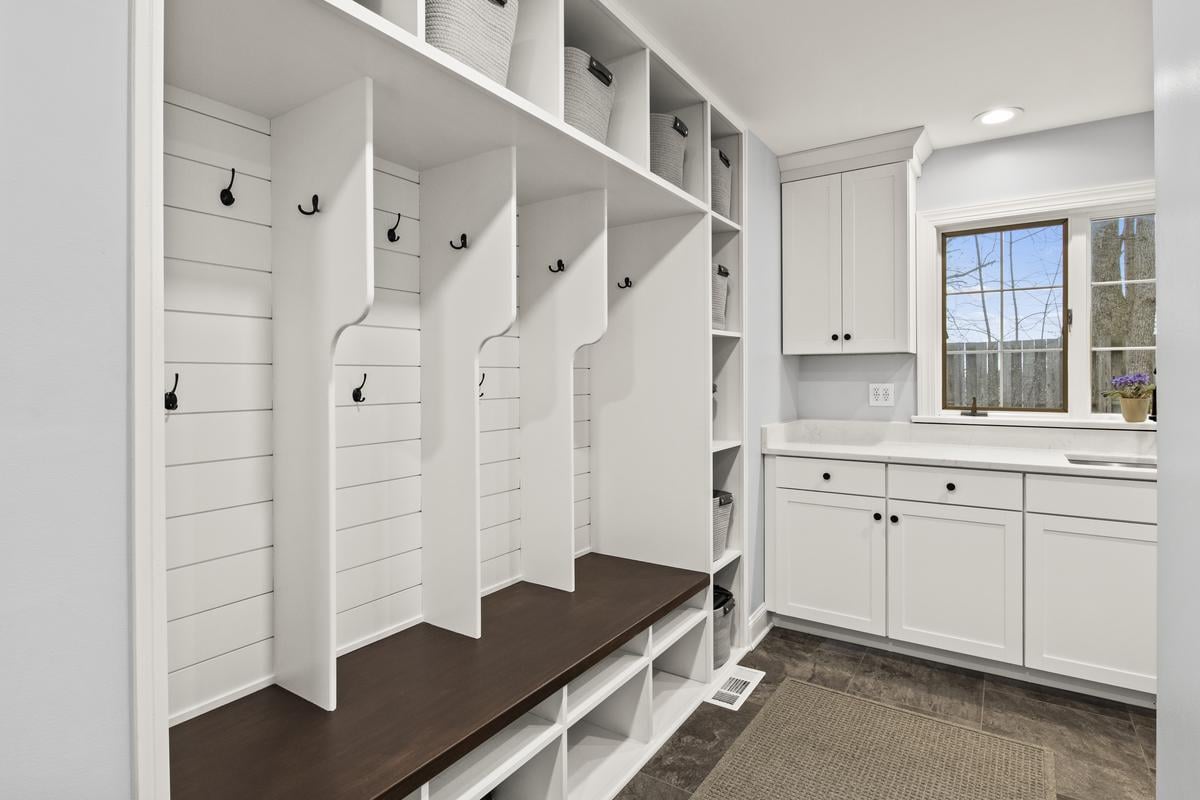
- Cubbies and lockers - Assigning each family member their own section cuts down on the morning scramble and keeps one person’s gear from spilling into someone else’s.
- Hooks at different heights - Coats and bags go up high, while lower hooks make it easy for kids to hang up their own things.
- Closed cabinets - Doors hide seasonal items like extra hats, scarves, and ice melt, so the space looks tidy even on its messiest days.
- Overhead shelving - Upper shelves are perfect for gear you only reach for occasionally, like sports equipment or off-season items.
A Bench Where You Need It
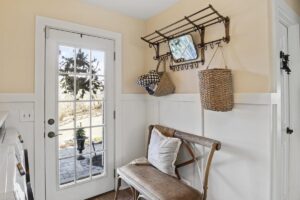
A built-in bench may be the most-used feature in the room. It gives everyone a place to sit while pulling on or kicking off snow boots, which means fewer wet socks and less hopping around on one foot. Storage underneath, whether it’s open cubbies for boots or drawers for smaller items, makes the bench work twice as hard without taking up extra floor space.
Flooring That Stands Up to Snowmelt and Salt
Flooring takes more abuse in a mudroom than anywhere else in the house, especially during the winter. Melting snow pools around boots, and road salt can stain, scratch, and wear down materials that weren’t built for it.
Porcelain or ceramic tile is one of the most popular choices because it resists water, cleans up easily, and holds up to heavy foot traffic. Luxury vinyl plank is another durable, water-resistant option that offers the look of wood with far less worry. Hardwood and carpet, on the other hand, tend to struggle with constant moisture and salt. Whatever you choose, a darker grout color and a sturdy boot tray or mat will help the floor look better between cleanings.
Small Details That Make a Big Difference
A few extra features can take a mudroom from functional to something you’ll wonder how you ever lived without.
- A utility sink - Perfect for rinsing muddy boots, washing off the dog after a snowy walk, or cleaning up gear before it goes back on the shelf.
- Good lighting - Winter mornings are dark, and bright overhead and task lighting make it easier to find what you need on the way out the door.
- A drop zone for daily items - A small shelf or drawer for keys, mail, and sunglasses keeps the essentials from ending up on the kitchen counter.
- A charging spot - Built-in outlets near the bench give phones and devices a place to charge while you’re home.
Where to Put a Mudroom
You don’t need a large, dedicated room to get the benefits of a mudroom. Most homes have a natural spot already.
The entry from the garage is one of the most common choices, since it’s often the door your family uses most. A back or side entry works well too, especially in homes where the front door is mostly for guests. In older Rochester homes, a back hallway, an enclosed porch, or an oversized closet near the door can often be reworked into a surprisingly functional drop zone.
Pairing Your Mudroom With the Laundry Room
If your laundry room sits near the back door, combining the two can make both spaces more useful. Wet coats, snow pants, and dirty clothes go straight from the door to the washer, and shared cabinetry and countertop space give you room to fold, sort, and store. Designing them together also helps the layout flow, so the space feels like one well-planned room instead of two cramped ones.
Making a Small Entry Work Harder
Even a narrow entry can hold more than you’d expect with the right design. A slim bench with hooks above it takes up only a few feet of wall, and vertical storage like tall cabinets or wall-mounted shelving makes the most of limited floor space. Closed storage helps a small area feel less cluttered, and a durable floor keeps it easy to maintain through the season.
Why Winter Is the Time to Plan
The best time to plan a mudroom is while you’re living with the mess. Over the next few months, pay attention to where gear piles up, which items never seem to have a home, and how many people are coming and going at once. Those details make it much easier to design a space that fits your household.
Planning over the winter also gives you time to work through design, selections, and ordering without feeling rushed, so your project is ready to begin when your schedule allows.
Design a Mudroom That Works for Your Home
At Four Points Remodeling, every project starts with on-site measuring at your home and a visit to our Pittsford showroom, where you can see cabinetry, tile, and flooring in person. Our designers create 3D renderings so you can see your new space before any work begins, and you’ll keep the same designer and project coordinator from the first conversation through the final walkthrough.
If your back door is already losing the battle with this winter, let’s talk about a space that can handle the next one.
Four Points Remodeling: Quality You Can Trust
At Four Points Remodeling, we’re dedicated to turning your vision into reality. From kitchens and bathrooms to full home transformations, our expert team is here to guide you every step of the way. Call or contact us today, and let’s start creating the home you’ve always wanted.